 |
Herschel,
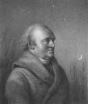
Sir William English astronomer Born: Hannover, Germany, November 15, 1738 Died: Slough, Buckinghamshire, England, August 25, 1822 | 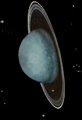 | ||||||||
Brahe Galileo Herschel Hevelius Hubble Kepler Leavitt Messier Shapley |
Herschel was born in Hannover, Germany at a time when it was a possession of King George II of England. Herschel moved to England, becoming a musician like his father. He changed his name from the German "Freidrich Wilhelm" to the English "William". By 1766, he had become a well-known music teacher and organist in the city of Bath. William Herschel became interested in astronomy, but could not afford to buy a telescope, so he decided to make his own. Assisted by his sister, Caroline, they spent many hours grinding lenses, and ended up with the best telescopes in existence at that time. Herschel began, in a systematic fashion, to examine objects in the night sky. From 1774 onwards, he began to publish many papers on what he saw, from mountains on the moon, to sunspot activity and comets. In 1781, Herschel came across an object that appeared as a disc, and identified it as a new planet, the first to be discovered since historic times. Astronomers decided to name this planet, Uranus, after the father of Saturn. This was an important breakthrough in astronomy, proving that much more remained to be discovered. Herschel went on to study pairs of stars, was able to deduce that they often orbited ech other, and discovered approximately 800 such double stars. He then studied the luminosity of stars, identifying those whose luminosity varied, and was the first reporter of variable stars. Herschel was the first man to present an astronomical picture in which the sun was just another star, amongst billions of others. Herschel viewed various cloudy objects in the sky, managing to catalogue about 2500 of them. His improved telescope also resolved some of the Messier objects into clusters of stars. Returning to Uranus in 1787, he discovered two of its satellites, Oberon and Titania. After building a new telescope, forty feet long, with a 48-inch reflector, and partly funded by King George III, he was able on the very first night, to discover two new satellites of Saturn, Enceladus amd Mimas, bringing to seven the total number of satellites discovered orbiting the ringed planet. Herschel also went on to discover that sunlight contained invisible light beyond the red end of the spectrum. This is today known as infra-red light. Herschel was knighted in 1816, and lived until the age of eighty-four, which, coincidentally, is the period that Uranus takes to revolve about the sun. | |||||||||
| ||||||||||
vb-tech.co.za